
Abstract
Objective
The development of bladder cancer is the result of the uncontrolled proliferation of cells that line the inner surface of the bladder. Bladder cancer ranks as the seventh most commonly diagnosed cancer in males. Educating patients about bladder cancer enhances treatment adherence and fosters trust in healthcare providers. The objective of our study was to assess the efficacy and clarity of the Turkish edition of the “Bladder Cancer Patient Information Guide” developed by the European Association of Urology, Patient Information Office.
Materials and Methods
Our study was planned as a survey to raise awareness of bladder cancer, assess knowledge, and provide information about the disease. The study comprised adult patients between the ages of 18 and 79 who had been diagnosed with a primary bladder tumor and had completed at least primary school. Patients were asked about their age, gender, educational background, economic status, and the duration and history of their tobacco use. Furthermore, questions were used to collect data on the information form.
Results
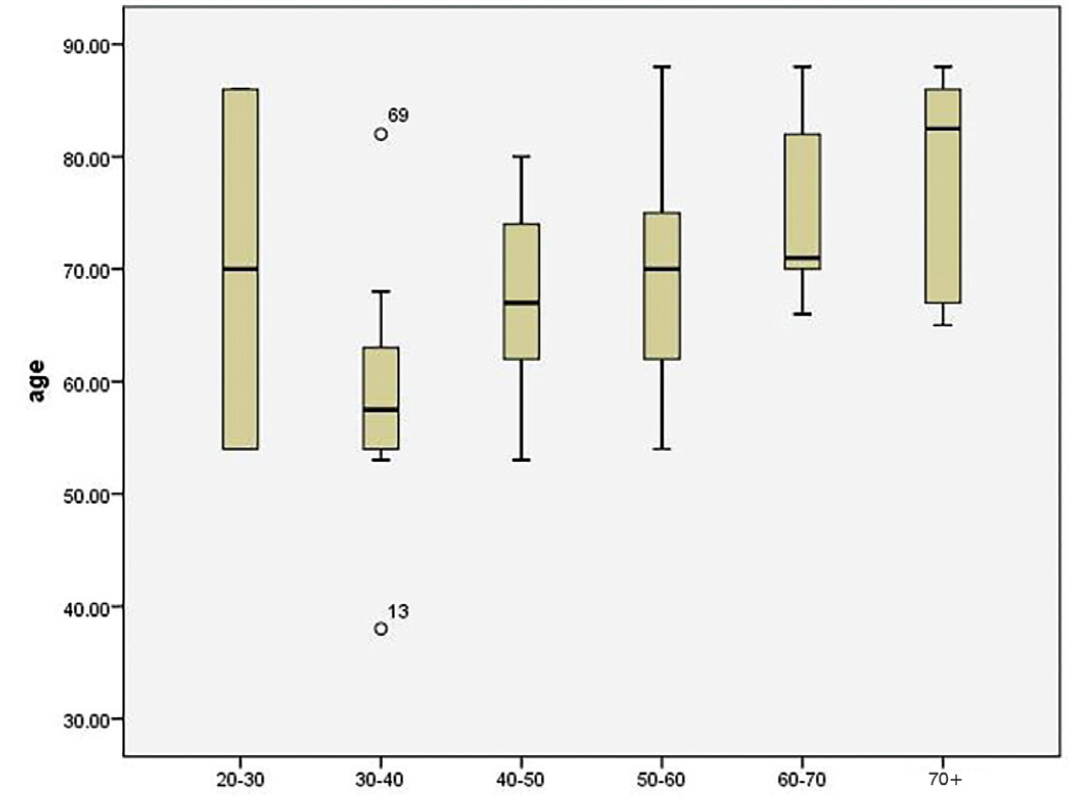
Our study involved 92 patients diagnosed with primary bladder tumors. Of the patients, 80 were male and 12 were female. The mean age was 68.9±9.78. The research comprised 92 patients who were diagnosed with primary bladder tumors. It is 80 degrees Fahrenheit, with 12 hours of sunlight. The statistically significant increase in knowledge regarding the etiology, preventive measures, and characteristics of bladder tumors was observed after providing information. Furthermore, there has been a rise in awareness of the symptoms of bladder tumors and the various treatment methods available for each type.
Conclusion
The significance of informing patients about their diseases is emphasized by the research. It is crucial that the public has access to information that is both accurate and comprehensible. This is achieved through the use of brochures that have been approved by urology associations such as European Association of Urology, American Urological Association and the British Association of Urological Surgeons. Regular updates to these brochures can significantly improve the sharing of information.
Keywords: Bladder cancer, effectivity, medico-legal, patient information
Introduction
Bladder cancer arises from the unregulated proliferation of cells that line the bladder’s inner surface. Bladder cancer ranks as the seventh most commonly diagnosed cancer in males. It ranks as the tenth most prevalent malignancy among both genders. The global incidence rate is 9.5 per 100,000 men and 2.4 per 100,000 women annually. Numerous studies have explored the origin and risk factors of bladder cancer. The prevalence of bladder cancer has risen during the past 60 to 70 years. This trend is particularly pronounced in less developed and developing nations, where industrialization results in carcinogenic exposure. The primary identified risk factor is smoking ().
Educating patients about bladder cancer enhances treatment adherence and increases trust in healthcare providers. Follow-up on bladder cancer is crucial for reducing recurrence and enhancing survival rates. Educating patients on bladder cancer prevention and risk factor reduction also helps prevent medico-legal issues. Consent forms obtained during clinical evaluations or prior to surgical procedures are traditionally intended to provide information to patients. Patients also seek to access multiple information sources, including internet platforms and social media, to understand the processes associated with their diseases. Nonetheless, the accuracy and reliability of the information are essential. Various urological ass various urological associations worldwide have developed patient information forms, which have been integrated into the surgical procedure approval process for numerous centers. Grated into the surgical procedure approval process for numerous centers. These forms represent a crucial component of the information dissemination process to patients. Consequently, it is essential to assess the clarity and efficacy of the forms.
The objective of our study was to assess the efficacy and clarity of the Turkish edition of the” Cancer Patient Information Guide”, developed by the European Association of Urology, Patient Information Office ().
Materials and Methods
Our research was structured as a survey that provides information regarding bladder cancer and assesses the existing knowledge level. We presented the Turkish edition of the bladder cancer information leaflet from the European Urological Association Information Office to the patients (). The enhancement in knowledge was assessed using a questionnaire administered prior to, and following, the reading. Additionally, we evaluated the “Turkish Readability Index” from the Turkish version of the information leaflet. The index created by Ateşman (), utilizing the “Flesch Reading Ease” formula, served as the Turkish Readability Index. The text’s word and sentence lengths determine the index. The computation excluded headings, references, and abbreviations in the data form. The grading ranges from 0 to 100, with higher scores correlating to enhanced readability and comprehension.
The study included adult patients with primary bladder tumors, aged 18 to 79 years, who had at least a primary education. We set our sample size estimation with a significance level of 0.05 and power of 0.2. The effect size was deemed acceptable at 0.3. We used the “One Sample Case” statistical approach for the t-test and mean calculations. The sample size was established at 71 by G*Power analysis. In light of the potential danger of patients incorrectly completing the questionnaires, the sample size was established at 80 to account for possible patient loss; a total of 92 patients were included in our study.
We conducted the assessment using questionnaire items derived from the subjects outlined in the bladder cancer information document. We questioned the patients about their age, gender, level of education, financial status, and history and duration of their tobacco consumption. We also administered questionnaire items to assess the data related to the information form. Ethics committee approval, numbered AEŞH-EK1-2023-786, was secured on 20 December 2023 from University of Health Sciences Türkiye, Ankara Etlik City Hospital.
Statistical Anaysis
All phases of the study adhered to the principles of the Declaration of Helsinki. Parametric tests (paired sample t-test, Pearson correlation test) and non-parametric tests (Wilcoxon test, Spearman correlation, McNemar test, Kappa test, and chi-square test) were utilized to analyze the data. Statistical analysis was conducted using SPSS software (version 20, SPSS Inc., Chicago, USA).
Results
Our study involved 92 patients diagnosed with primary bladder tumors. Of the patients, 80 were male and 12 were female. The mean age was 68.9±9.78 (). The predominant diagnosed age range was 50-60 years (n=41, 46.6%) (). The
Table 1. Demographic datas and tobacco using status data
Parameters | Sub parameters | Number (n) | Ratio (%) |
|---|---|---|---|
Gender | Female | 12 | 13.04 |
Male | 80 | 86.96 | |
Year | Min | 38 | - |
Max | 88 | - | |
Mean | 68.9 | - | |
Marital status | Maried | 83 | 90.22 |
Single | 9 | 9.78 | |
Education | Primary | 42 | 45.7 |
High school | 34 | 37 | |
University | 15 | 16.3 | |
Master degree | 1 | 1.1 | |
Economic status | Poor <17 k₺ | 20 | 21.7 |
Middle 17 k-35 k₺ | 47 | 51.1 | |
Good 35 k-70 k | 21 | 22.8 | |
Very good <70 k | 4 | 4.3 | |
Tobacco products using | Using | 76 | 82.6 |
Not using | 16 | 17.4 | |
Tobacco products using | 10-20 (year) | 27 | 29.3 |
Time | 20-30 (year) | 39 | 42.4 |
30-40 (year) | 17 | 18.5 | |
>40 years | 9 | 9.8 | |
I wish I hadn’t used it | Yes | 74 | 80.4 |
No | 18 | 19.6 |
display the survey questions, responses, and statistical outcomes.
Table 2. Answers to the survey questions and statistical results
What is a bladder tumour? | Before giving information (n-%) | After giving information (n-%) | p<0.05 |
|---|---|---|---|
Abnormal enlargement of the bladder | 5 (5.4%) | 10 (10.9%) | 0.011 |
Ballooning in the bladder | 29 (31.5%) | 14 (15.2%) | |
It is the growth of abnormal tissue (tumour) in the bladder. | 58 (63%) | 68 (73.8%) | |
What are the etiological factors (causes) of the bladder) | Before giving information (n-%) | After giving information (n-%) | p<0.05 |
Consumption of tobacco products (cigarettes, etc.) paint and petrol products, urinary tract infections | 4 (4.3%) | 8 (8.7%) | 0.020 |
Chronic alcohol consumption | 66 (71.7%) | 78 (84.8%) | |
Working in health facilities and security areas (radiation exposure) | 6 (6.5%) | 16 (17.4%) | |
Chronic diseases | 4 (4.3%) | 2 (2.2%) | |
Which option is correct about the staging of bladder cancer? | Before giving information (n-%) | After giving information (n-%) | p<0.05 |
Extending to muscle tissue, not extending to muscle tissue, advanced, metastatic | 6 (6.5%) | 24 (26.1%) | 0.003 |
Extending to the liver, extending to the lung, extending to the prostate | 42 (45.7%) | 32 (34.8%) | |
Growing into the bladder, extending outside the bladder | 42 (45.7%) | 34 (37%) | |
Superficial, deep, extending to distant organs | 2 (2.2%) | 2 (2.2%) | |
What should we do to prevent bladder cancer? | Before giving information (n-%) | After giving information (n-%) | p<0.05 |
Do not consume tobacco products, drink plenty of water, avoid harmful chemicals | 50 (54.3%) | 65 (70.7%) | 0.006 |
Avoiding alcohol, supertive lifestyle | 22 (23.9%) | 22 (23.9%) | |
Protein-rich diet | 16 (17.4%) | 4 (4.3%) | |
Reguler kidnet stone passing | 4 (4.3%) | 1 (1.1%) |
Table 3. Answers to the survey questions and statistical results-2
What are the symptoms of bladder cancer? | Before giving information (n-%) | After giving information (n-%) | p<0.05 |
|---|---|---|---|
Red coloured urine, painful micturition | 20 (21.7%) | 12 (13%) | - - 0.036 |
Painless, red, haemorrhagic urination, abdominal pain, frequent urination | 54 (58.7%) | 70 (76.1%) | |
Frequent urination at night | 16 (17.4%) | 8 (8.7%) | |
Frequent urinary tract infections | 2 (2.2%) | 2 (2.2%) | - |
Which tests are required for the diagnosis of bladder cancer? | Before giving information (n-%) | After giving information (n-%) | p<0.05 |
Blood, urinalysis and ECO | 6 (6.5%) | 10 (10.9%) | 0.163 |
Holter test | 66 (71.7%) | 4 (4.3%) | |
Voiding test | 6 (6.5%) | 13 (14.1%) | |
Urinalysis, ultrasonography, cystoscopy, CT and/or MRI | 59 (64.1%) | 65 (70.7%) | |
What is non-muscle invasive bladder cancer? | Before giving information (n-%) | After giving information (n-%) | p<0.05 |
Covers the superficial layers of the bladder | 21 (22.8%) | 24 (26.1%) | - - - - 0.081 |
Cancer that grows into the bladder | 43 (46.7%) | 29 (31.5%) | |
Not extented into the deeper layers of the bladder wall | 24 (26.1%) | 40 (43.5%) | |
Tumour extending outside of the bladder | 1 (1.1%) | 2 (2.2%) | |
What is the treatment of non-muscle invasive bladder cancer? | Before giving information (n-%) | After giving information (n-%) | p<0.05 |
Transurethral resection of bladder tumour and intra-vesical irrigation of the bladder | 33 (35.9%) | 31 (33.7%) | - - 0.024 - |
Complete removal of the bladder | 27 (29.3%) | 35 (38%) | |
Intra-vesical chemotheraphy | 26 (28.3%) | 22 (23.9%) | |
Radiotheraphy (radiation) of the bladder | 6 (6.5%) | 4 (4.3%) |
CT: Computed tomography, MRI: Magnetic resonance imaging, ECO: Echcardiography
Table 4. Answers to the survey questions and statistical results-3
Which is the correct option for the treatment of muscle invasive bladder cancer? | Before giving information (n-%) | After giving information (n-%) | p<0.05 |
|---|---|---|---|
Complete removal of the bladder, bladder-sparing surgery, CT, RT | 20 (21.7%) | 46 (50%) | - - 0.001 |
Endourological resection of bladder tumour (through the urethra) | 61 (66.3%) | 38 (41.3%) | |
Complete removal of the prostate | 9 (9.8%) | 6 (6.5%) | |
Complete removal of the urinary tract | 2 (2.2%) | 2 (2.2%) | |
Which is correct about the preventive treatment of bladder cancer? | Before giving information (n-%) | After giving information (n-%) | p<0.05 |
Complete removal of the bladder | 5 (5.4%) | 6 (6.5%) | - |
TUR-MT and RT are used to locally treat or control a bladder tumour | 44 (47.8%) | 53 (57.6%) | 0.060 |
Intra-vesical chemotheraphy | 31 (33.7%) | 29 (31.5%) | |
Complete removal of the cancerous area in the bladder | 12 (13%) | 4 (4.3%) | |
What is a positive surgical margin? | Before giving information (n-%) | After giving information (n-%) | p<0.05 |
Cancer is the presence of cancer cells in a circle of normal tissue around the cacer | 38 (41.3%) | 45 (48.9%) | - - - - 0.330 |
The presence of a secondary cancer cell group within the cancer cells | 36 (39.1%) | 34 (37%) | |
During the treatment of bladder cancer, it is a different cancer againg | 16 (17.4%) | 12 (13%) | |
Kidney tumour is observed simultaneously with bladder cancer | 2 (2.2%) | 1 (1.1%) |
CT: Computed tomography, RT: Radiotheraphy, TUR-MT: Maximal transurethral bladder tumor resection
We determined the Turkish Readability Index to be 53.3. The average sentence length is 11.9 words, while the average word length is 2.85 characters. The index score indicates a readability level of 11th to 12th grade. The information guide is challenging to comprehend, possibly because patients with only primary education represent the largest demographic group.
Following the survey, we examined the changes in patient’ knowledge regarding various aspects of bladder cancer. displays the associated modifications and outcomes of the statistical analysis.
Table 5. Changes in knowledge level about bladder cancer
Levels of knowledge | Increase (n) | Decrease (n) | Unchanged (n) | p<0.05 |
|---|---|---|---|---|
Formation and stages of bladder cancer | 50 | 16 | 26 | 0.001 |
Diagnostic methods of bladder tumour | 30 | 32 | 30 | 0.985 |
Treatment options of bladder cancer | 34 | 23 | 35 | 0.134 |
Metastatic bladder cancer | 40 | 6 | 46 | 0.001 |
Recurrent bladder cancer | 38 | 9 | 45 | 0.001 |
Bladder cancer follow-up | 33 | 13 | 46 | 0.002 |
Level of anxiety about bladder cancer surgery | 35 | 27 | 30 | 0.383 |
Prevention of bladder cancer | 31 | 22 | 39 | 0.142 |
Benefit of smoking cessation advice for bladder cancer | 32 | 11 | 49 | 0.014 |
It’s interesting that after reading the informational guide, the number of patients who chose “total removal of the bladder” as their treatment for non-muscle-invasive bladder cancer rose from 27 to 35. The increase was statistically significant (p=0.024). We must provide patients with a comprehensive understanding regarding the management of non-muscle invasive bladder cancer.
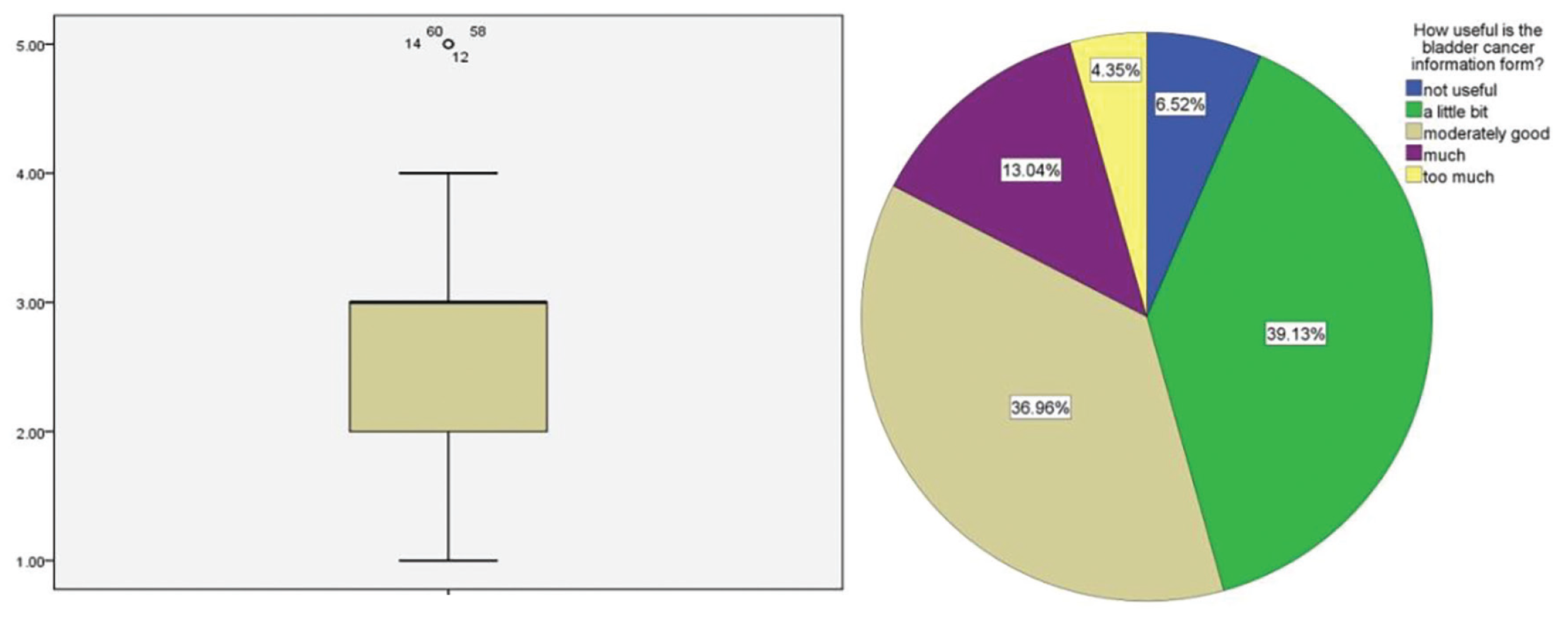
The survey asked participants about the usefulness of the information guide. Thirty-six patients responded that it was somewhat useful, thirty-four patients indicated it was fairly useful, twelve patients thought it was very useful, and four patients considered it extremely useful. The average score was determined to be 2.69±0.97 ().
Discussion
Patients must be informed of their medical conditions and the surgical procedures to be undertaken. It is essential to elucidate the rationale for the surgery, treatment alternatives, benefits, and risks to ensure the validity of the informed consent. Patients explore various sources for information regarding their medical problems. It is essential that patients receive accurate guidance in this matter. The British Association of Urological Surgeons (BAUS) and the Patient Information Office of the European Urological Association provide informational resources on bladder cancer. Patients may be provided with these and comparable guidelines established by scientific associations. The dependability and clarity of the information in these standards are ethically and legally significant. Consequently, it is essential to assess the clarity of these guidelines and their efficacy for patients ().
Graham et al. () assessed the comprehensibility of informed consent documents. Their article included certain criteria for assessment. The “Flesch Reading Ease” assessment assigns a score ranging from 0 to 100 points to a text. A score exceeding 60 signifies a reading proficiency equivalent to the 8th grade level. This level indicates that readability and comprehensibility is appropriate for adults. Likewise, the “Flesch-Kincaid Grade Level” is a readability metric designed to assess the complexity of the words and sentences within a document.
The score ranges from 0 to 18. Another assessment criterion is the Simple Measure of Gobbledygook (SMOG) score. The SMOG score assesses the years of education requisite for an individual to comprehend a text (). SMOG is recognized as a readability scale that offers a precise assessment. Graham et al. () assert that the SMOG scale demonstrates a more consistent and robust connection compared to the Flesch-Kincaid in validation trials. It is particularly favored in the health literature. The prevalence of polysyllabic terms in health literature diminishes text comprehension. Consequently, it has been asserted that using straightforward language is essential for patient information pamphlets. They asserted that the information pamphlets produced by BAUS were challenging to comprehend and necessitated a higher reading level than SMOG indicates. This circumstance precludes the use of leaflets as the sole source of information for the United Kingdom. It was underscored that the information must be articulated succinctly and clearly in collaboration with lay patient groups. The Turkish Readability Index of the information guide in our investigation was 53.3. This index score corresponds to a readability level of 11th to 12th grade. The majority of survey participants possessed a primary education. We believe that the guideline is challenging to comprehend. It is essential to assess the guideline for its simplification and enhancement of comprehensibility.
No other study in the literature assesses the efficacy of the information guide, using exam questions similar to those in our study. Askari and Shergill () evaluated the sufficiency of brochures on extracorporeal shock wave lithotripsy. They collected data from 12 distinct centers and assessed the brochures to determine what issues should be incorporated. Although none of the brochures included details regarding the procedure’s location, the majority included information on pre-procedural preparation, analgesia, and follow-up care. Complications, including infection, hematuria, calculi, and renal atrophy and injury, were presented in the brochures with differing frequency. No brochure indicated the possibility of urinary retention or visceral damage. Diagrams of anatomy and procedures were included in fewer than fifty percent of the brochures (). This study has not assessed numerous brochures. Our study assessed the European Society of Urology’s Bladder Cancer Information brochure by employing a knowledge level measurement approach based on questions developed around the outlined topics.
Study Limitations
The main limitation of our study is that the participants predominantly have attained primary school educational levels. The Turkish edition of this informational guide, produced by the Patient Information Office of the European Association of Urology, is challenging to comprehend. Therefore, had the guide comprehended by the patients been more intelligible, it would have influenced the outcomes of our research. This limitation reveals the purpose of our study.
Conclusion
It is crucial to confirm that the informed consent forms that patients are provided with prior to treatment are valid and contain adequate information. The adequacy of the information documents provided to patients was assessed in the context of their comprehension levels in our study. For instance, it was noted that the correct response rates increased following the provision of information regarding bladder cancer, its etiological factors, staging, prevention, and treatments. It has been verified that these increases are also statistically significant. Brochures that have been approved by urology associations such as EAU, AUA, and BAUS are essential for the general public to access accurate and comprehensible information. The dissemination of information will be significantly enhanced through the consistent updating of these brochures.
Footnotes
Ethics
Ethics Committee Approval: All phases of the study adhered to the principles of the Declaration of Helsinki. Ethics committee approval, numbered AEŞH-EK1-2023-786, was secured on 20 December 2023 from University of Health Sciences Türkiye, Ankara Etlik City Hospital.
Informed Consent: Informed consent forms were obtained from all volunteers.
Acknowledgments
Publication: The results of the study were not published in full or in part in form of abstracts.
Contribution: There is not any contributors who may not be listed as authors.
Authorship Contributions
Concept: F.S., F.Ç., Design: F.S., F.Ç., Data Collection or Processing: F.S., S.K., D.D., Analysis or Interpretation: F.S., M.A., D.D., M.A.İ., Literature Search: S.K., M.A., Writing: F.S., M.A., M.A.İ.
Conflict of Interest: No conflict of interest was declared by the authors.
Financial Disclosure: The authors declared that this study received no financial support.
References
Gontero P, Compérat E, Domínguez Escrig JL, et al. Guidelines on non-muscle-invasive bladder cancer. 2024. Available at: https://uroweb.org/guidelines/non-muscle-invasive-bladder-cancer
EAU-Mesane kanseri bilgilendirme kılavuzu. Erişim adresi: https://patients.uroweb.org/condition/bladder-cancer
Ateşman E. Türkçede okunabilirliğin ölçülmesi. Dil Dergisi. 1997;58:71-74.
BAUS-Patient information forms. Available at: https://www.baus.org.uk/patients/information_leaflets/.
Graham C, Reynard JM, Turney BW. Consent information leaflets - readable or unreadable? J Clin Urol. 2015;8:177-182.
Askari A, Shergill I. Patient information leaflets for extracorporeal shock wave lithotripsy: questionnaire survey. JRSM Short Rep. 2012;3:35.